FIT Colon Cancer Screening Test
/each


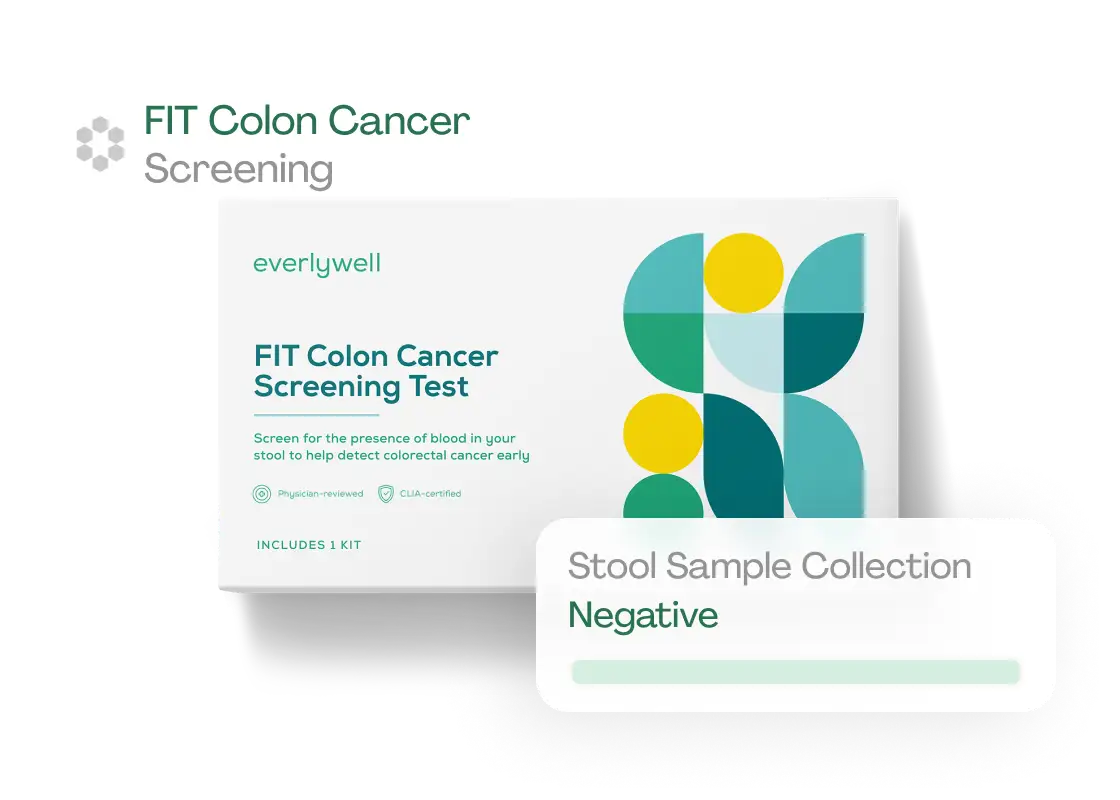


Our Fecal Immunochemical Test (FIT) screens for the presence of hidden blood in your stool to help detect early signs of colon cancer. This test is intended for those between the ages of 45-75 or those who have an increased risk for colon cancer (such as family history).
Measures the presence of blood in your stool
Stool sample collection
This test measures the presence of blood in your stool.
Because colorectal polyps (which may be precancerous) can leak blood during bowel movements, screening for blood in your stool is a simple, non-invasive way to catch colon cancer early.
A positive result does not necessarily mean that you have colon cancer. It simply means that you should discuss the results with your healthcare provider to discuss next steps, which may include a colonoscopy.
The American Cancer Society and US Preventive Task Force recommend regular screening for colon cancer starting at age 45 for people at normal risk. People are considered to be at normal risk if they:
- Have no personal or family history of colon cancer, including familial disorders such as Lynch syndrome
- Have no personal history of inflammatory bowel diseases such as Crohn's or ulcerative colitis
- Have never received radiation in the belly area to treat other cancers
Symptoms of colon and colorectal cancer are similar to bowel disorders and can include:
- Unexplained weight loss
- Changes in stool habits
- Blood in the stool (that's what FIT screens for)
- Abdominal aches or cramps that do not go away
- The feeling of the bowels not fully emptying
The CDC advises that the most obvious difference in colon cancer symptoms from other gastrointestinal conditions is that symptoms are persistent, usually lasting for more than 3 months. If you suspect you have colon or colorectal cancer, it's best to contact a healthcare provider right away.
At-home lab testing made easy
- Pre-paid shipping (both ways)
- Everything you need to collect your sample and send it in
- Detailed directions and an instructional video
- Our care team is standing by if you have questions
- Digital (and printable) results
- Educational video sessions, led by healthcare professionals

FIT Colon Cancer Screening Test
Free shipping
FSA / HSA accepted
Free shipping
FSA / HSA accepted

100% digital
Your results
Easy to access, even easier to understand
Gain meaningful insights about your health with easy-to-understand test results without the complex jargon.
You'll receive a complete breakdown of your report—including each marker tested and what your results mean for you.
Use your report to make an action plan with concrete next steps. And don't worry, we'll provide some additional resources and helpful tips along the way.
Related tests
Customers also bought
FAQs
You have questions, we have answers
For people who are at average risk of colorectal cancer, the U.S. Preventive Services Task Force (USPSTF), Centers for Disease Control and Prevention (CDC), and the American Cancer Society (ACS), recommend yearly FIT testing for individuals between the ages of 45-75.
This test measures the presence of occult blood in stool as one method of assessing potential colon cancer or precancerous lesions or polyps. This means that conditions or procedures that involve or result in genital or rectal bleeding, including, but not limited to menstruation, diverticulitis, IBS, hemorrhoids, post-colonoscopy or polyp removal, can result in false positive results to this test. Individuals with these conditions are advised to wait until no genital or rectal bleeding is occurring to collect a test sample. Positive results on this test are not a diagnosis of colon or colorectal cancer, and require follow-up with a healthcare professional, where additional testing such as a colonoscopy is generally indicated as the next step. An independent physician will determine whether to authorize your FIT test request, if appropriate. The test is intended for those ages 45-75.
For people above the age of 75, other factors must be considered, such as general health and willingness to undergo intervention should your FIT screening results be positive.
You’re considered to be at average risk if you do not have:
A family history or predisposition of colon cancer (such as Lynch syndrome or familial adenomatous polyposis)
A personal history of inflammatory bowel disease (ulcerative colitis or Crohn’s disease)
A personal history of colorectal cancer, adenomas or other related cancers
A positive result from another screening method in the last year
The age of initial FIT screening and surveillance intervals are highly dependent on the nature of the risk for individuals who are considered high risk. If any of the above apply to you, it is recommended you follow up with your healthcare provider about when to initiate colorectal cancer screening, what type of screening test is most appropriate, and how frequently you should repeat screening.
This colon screening test is not a replacement for a colonoscopy. The test is designed to show if blood is detected in your stool, which may be associated with colorectal polyps and cancers. False positive and false negative results may occur. Any positive FIT test result should be shared with your healthcare provider and followed up with a colonoscopy. Do not use this test if you have adenomas, inflammatory bowel disease, certain hereditary syndromes, or a personal family history of colorectal cancer. All tests are ordered and reviewed by an independent physician. Individuals age 75+ should follow up with their healthcare provider about the benefits and risks of screening.
The FIT Colon Cancer Screening Test is intended for use by individuals 45 years of age or older. Taking this test prior to the recommended age is outside of the intended use of the product, but is possible. This test measures the presence of occult blood in stool as one method of assessing potential colon cancer or precancerous lesions or polyps. Positive results on this test are not a diagnosis of colon or colorectal cancer, and require follow-up with a healthcare professional, where additional testing such as a colonoscopy is generally indicated as the next step.
Colon or colorectal cancer usually develops slowly over a period of many years. It often begins as a non-cancerous—but abnormal—mass of tissue (called a “polyp”) that grows along the inner lining of the colon or rectum. Polyps can eventually become cancerous—especially a particular kind of colorectal polyp known as an adenoma.
In general, colorectal polyps (meaning found in either your colon or rectum) will not cause symptoms. This is why routine screening is so important—so you can catch colon cancer early and treat it accordingly.
We recommend speaking with your healthcare provider right away if you are experiencing any of the following symptoms:
Alternating or chronic diarrhea or constipation
Very thin “pencil” stools
Persistent urge to have a bowel movement
Significant weight loss
New or worsening pain in the abdomen
You do not need to fast or change your diet or any medications prior to testing. However, you should wait to be tested if you are experiencing any of the following:
Bleeding from hemorrhoids
Currently menstruating
Blood in the urine
Recent GI surgery
Recent diverticulitis flare
Your FIT Colon Cancer Screening Test results will show you if you are negative or positive for blood in your stool. A positive FIT result does not mean that you have colon cancer—it simply means you need to share the results with your healthcare provider to discuss next steps (which may include a colonoscopy).


